
Beverage Packaging Solution Company of the Year - 2025
Food Processing and Packaging - 2025
Nominate a Company
Usually, the qualified subscribers of our magazine nominate companies with whom they have collaborated and experienced exceptional results to be in this list. Did a company you recently worked with give you stellar results and ROI? Did it turn out to be one you would wholeheartedly recommend to peers? Or do you know of such an outstanding company through your network? Please fill in the details below and nominate them to be featured here.

Beverage Packaging Solution Company of the Year

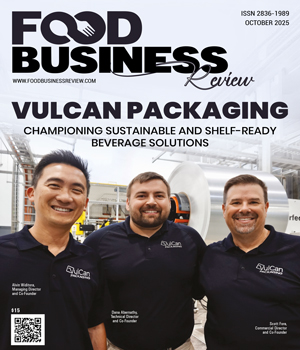
VulCan Packaging
VulCan Packaging, North America’s only manufacturer of aTULC cans, delivers sustainable, high-performance aluminum packaging for beverage brands. Its advanced technology protects complex beverage formulations while enabling rapid production, custom designs and market-ready stability.
Food Processing and Packaging Info
Q1
What Do Top Food Processing and Packaging Companies Do?
Top Food Processing and Packaging Companies handle the transformation of raw ingredients into finished food products and ensure those products are safely packed for distribution. This includes processing methods such as mixing, cooking and preservation, along with packaging functions like sealing, labeling and shelf-life protection. The work sits at the intersection of food science and industrial engineering. A small inconsistency in temperature control or packaging integrity can lead to spoilage, recalls or regulatory issues. These companies are responsible for keeping products consistent, compliant and ready for retail or foodservice environments.
Q2
Why Do Top Food Processing and Packaging Companies Matter Right Now?
Top Food Processing and Packaging Companies are under pressure from shifting consumer expectations and tighter regulatory oversight. Demand for ready-to-eat meals, clean-label products and longer shelf life is increasing, while supply chains remain unpredictable. At the same time, retailers expect uniform quality and traceability. A delay in packaging or a labeling error can halt distribution. Many food manufacturers now depend on these companies not just for production but for risk control, especially when scaling new products or entering new markets.
Q3
How Should Food Manufacturers Evaluate Providers in This Category?
Evaluation tends to break down when buyers focus only on capacity or price. The more useful test is operational fit. Can the provider handle the specific product format, shelf-life requirement and compliance standard? Review how it manages batch tracking, allergen controls and changeovers between product lines. Ask to see how it handles a real production run or packaging switch. Poor coordination here can lead to contamination risks or downtime. The best food processing and packaging providers show consistency under pressure, not just in controlled demos.
Q4
What Business Value Do These Companies Deliver Beyond Production?
The value is less about output volume and more about reliability and risk reduction. Consistent processing reduces product variability, which directly affects taste, safety and brand trust. Packaging quality influences shelf life, transport durability and retail presentation. A weak seal or incorrect label can lead to rejected shipments or compliance penalties. These companies also help manufacturers reduce internal complexity by consolidating production and packaging into a single workflow, which simplifies logistics and inventory planning.
Q5
How Are Technology and Automation Changing Food Processing and Packaging?
Automation is reshaping both processing precision and packaging speed. Modern systems monitor temperature, pressure and contamination risks in real time, reducing human error. In packaging, robotics and vision systems handle sorting, sealing and inspection at scale. Traceability tools are becoming standard, allowing manufacturers to track products from ingredient source to final shipment. The practical benefit is fewer manual checks and clearer audit trails. When something goes wrong, teams can isolate the issue faster instead of tracing it across multiple disconnected systems.
Q6
What Should Buyers Prioritize When Comparing Top Food Processing and Packaging Companies?
Buyers comparing Top Food Processing and Packaging Companies should focus on process control, compliance discipline and flexibility. Not every provider can handle rapid product changes or specialized formulations. Look closely at how it manages documentation, audits and recalls. Review how it responds to production disruptions or late specification changes. A provider that cannot adjust quickly can delay an entire product launch. The decision is less about who can produce at scale and more about who can do it consistently without introducing risk into the supply chain.
